Persistent bloating can make you feel uncomfortably full, gassy, and sluggish—even when you’re trying to eat well. While there’s no one-size-fits-all solution, understanding how digestive enzymes work, and pairing them with simple daily habits, can dramatically reduce bloating for many people.
This guide walks you through what digestive enzymes do, how to know if you might benefit from them, and the easy lifestyle changes that support your gut so you can feel lighter and more energized day after day.
What Are Digestive Enzymes and Why Do They Matter?
Digestive enzymes are proteins your body makes to break food into smaller, absorbable pieces. Different enzymes target different nutrients:
- Amylases break down carbohydrates into sugars
- Proteases break down proteins into amino acids
- Lipases break down fats into fatty acids
- Lactase, sucrase, maltase and others break down specific sugars
These enzymes are produced mainly in your salivary glands, stomach, pancreas, and small intestine. When they’re working well, food moves through efficiently, gas is minimized, and you feel comfortable after meals.
When they’re not working as well—whether due to stress, diet, age, certain medications, or medical conditions—food can ferment in the gut, leading to:
- Bloating
- Excess gas
- Abdominal discomfort
- Changes in stool (loose, greasy, or floating)
For many people, improving enzyme support (either naturally or with supplements) plus small habit shifts is enough to significantly reduce persistent bloating.
Signs You Might Need More Digestive Support
Not all bloating is an enzyme issue, but these patterns can suggest your digestion is under strain:
- You feel bloated or “6 months pregnant” after normal-sized meals
- Gas is frequent, foul-smelling, or worse after certain foods
- You see undigested food in your stool regularly
- You feel heavy, sluggish, or sleepy after eating
- You get upper abdominal discomfort or fullness that lingers for hours
Keep in mind: persistent or severe symptoms, weight loss, blood in stool, or pain always warrant a medical evaluation to rule out more serious issues like celiac disease, inflammatory bowel disease, or pancreatic insufficiency (source: National Institute of Diabetes and Digestive and Kidney Diseases).
Simple Daily Habits That Naturally Boost Digestive Enzymes
You don’t have to overhaul your life to support your enzymes. Small, consistent habits often make the biggest difference.
1. Slow Down and Chew Thoroughly
Digestion starts in the mouth. Your saliva contains amylase and lipase, which begin breaking down carbs and fats before food even reaches your stomach.
Daily habit:
- Aim for 15–20 chews per bite for typical foods (more for tougher foods)
- Put your fork down between bites
- Avoid eating while rushing, working, or scrolling
Better chewing:
- Gives enzymes in saliva time to work
- Reduces the workload on your stomach and pancreas
- Often reduces the amount of air you swallow (a key contributor to bloating)
2. Eat at Regular, Calm Mealtimes
When you’re stressed or in “fight-or-flight” mode, your body diverts energy away from digestion. Acid production, enzyme secretion, and gut motility can all slow or become uncoordinated.
Daily habit:
- Create predictable meal windows rather than constant grazing
- Take 3–5 deep belly breaths before you start eating
- Try to sit down at a table instead of eating on the go
The nervous system that controls digestion (the enteric nervous system) works best when your brain gets the signal that it’s safe and calm. More calm = better enzyme release.
3. Include Natural Food Sources of Digestive Enzymes
Certain foods contain natural enzymes that can complement your body’s own production and may ease bloating after meals.
Helpful enzyme-rich foods:
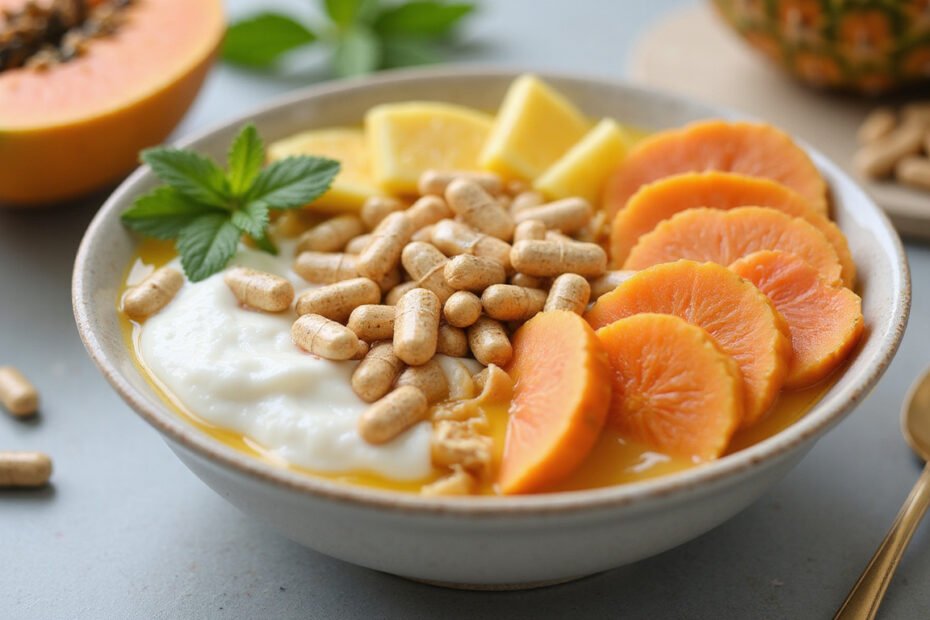
- Pineapple – contains bromelain (protease)
- Papaya – contains papain (protease)
- Kiwi – contains actinidin (protease)
- Mango – contains amylase
- Fermented foods – kefir, yogurt with live cultures, sauerkraut, kimchi, miso
- Raw honey – in small amounts, contains a variety of enzymes
- Raw, unpasteurized apple cider vinegar – may support stomach acidity and digestion for some people
Daily habit:
- Add a small serving of one enzyme-rich food to one or two meals per day—e.g., a few slices of pineapple after a protein-heavy meal or a spoonful of sauerkraut with lunch.
4. Support Your Stomach Acid (Not Just Suppress It)
Many people assume heartburn means they have too much stomach acid, but in some cases it’s actually low acid and poor digestion that lead to reflux and bloating.
Adequate stomach acid helps:
- Activate pepsin, a key protein-digesting enzyme
- Signal the pancreas and gallbladder to release digestive enzymes and bile
- Kill harmful microbes in food
Daily habit:
- Start meals with a bitter food like arugula, radicchio, or a few drops of a bitters tincture (if appropriate for you)
- Limit frequent, long-term use of acid-suppressing medications without medical guidance
- Avoid large amounts of water during meals (small sips are fine)
If you’re on acid-suppressing medication, always speak with your healthcare provider before making changes.
5. Choose Easier-to-Digest Meal Combinations
Overloading the system with heavy, rich, or ultra-processed foods can leave your digestive enzymes struggling to keep up.
Daily habit:
- Build meals around:
- Lean proteins (eggs, poultry, fish, tofu, tempeh, lentils)
- Cooked vegetables (gentler on digestion than large amounts of raw)
- Moderate healthy fats (olive oil, avocado, nuts and seeds in small portions)
- Simple carbs in reasonable amounts (rice, potatoes, oats)
Cooking methods matter: steaming, stewing, slow cooking, and baking are often gentler on digestion than frying or heavily charring food.

6. Hydrate Smartly Throughout the Day
Water helps move food through the GI tract, dissolves nutrients, and supports enzyme function. But timing matters.
Daily habit:
- Sip water regularly between meals
- Aim for pale-yellow urine as a loose gauge of hydration
- During meals, stick to small sips rather than chugging large glasses, which can dilute stomach acid and impact early digestion for some people
When to Consider Digestive Enzyme Supplements
Sometimes, even with great habits, your body needs extra help breaking down food. Digestive enzyme supplements can be useful tools when used appropriately.
Common Types of Digestive Enzyme Supplements
- Broad-spectrum blends: usually include protease, amylase, and lipase, sometimes plus lactase and others
- Lactase: for people with lactose intolerance, to help digest milk sugar
- Alpha-galactosidase: helps digest certain carbs in beans and cruciferous vegetables
- Pancreatic enzyme replacement therapy (PERT): prescription-strength enzymes for people with diagnosed pancreatic insufficiency
Most over-the-counter formulas are taken with the first bite of a meal so they’re present while food is in the stomach and small intestine.
Who Might Benefit From Enzyme Supplements?
You might discuss enzymes with a healthcare provider if:
- Bloating is consistently worse after particular foods (dairy, beans, high-fat meals)
- You’ve had gallbladder removal, pancreatic issues, or certain GI surgeries
- You’re over 60 and notice heavier meals bother you more than they used to
- You see fatty, greasy, or floating stools regularly
A provider or dietitian can help choose an appropriate formula and dose, and make sure your symptoms aren’t caused by a more serious underlying condition.
Simple Daily Routine to Reduce Bloating with Digestive Enzymes
Here’s how you might structure a typical day to support your digestive enzymes and minimize bloating:
-
Morning
- Drink a glass of water after waking
- Eat a calm, seated breakfast; chew thoroughly
- Include a fermented food a few times per week (e.g., yogurt or kefir)
-
Midday
- Take 2–3 short movement breaks (5–10 minutes) to stimulate gut motility
- Eat lunch away from your desk when possible
- Start with a small salad of bitter greens or a few forkfuls of sauerkraut
-
Afternoon
- Hydrate regularly between meals
- Notice patterns: which snacks leave you gassy or bloated?
-
Evening
- Have dinner 2–3 hours before bed
- If using a digestive enzyme supplement, take it with the first few bites
- Keep the meal moderate in size; favor cooked veggies and lean protein
-
Night
- Light walk after dinner to aid digestion
- Wind down without heavy, late-night snacking
Even if you don’t follow this perfectly, implementing a few of these steps consistently can noticeably reduce daily bloating.
Other Bloating Triggers to Watch (Beyond Digestive Enzymes)
Enzymes are one piece of the puzzle. Persistent bloating can also be driven by:
- Swallowed air from chewing gum, drinking through straws, or talking while eating
- High-FODMAP foods (certain fermentable carbs) in sensitive individuals
- Hormonal shifts, especially around the menstrual cycle
- Constipation, which can trap gas and stool in the intestines
- Food intolerances (lactose, fructose, gluten in celiac disease, etc.)
- Imbalances in gut bacteria or small intestinal bacterial overgrowth (SIBO)
If you’ve improved your habits and tried basic enzyme support but still struggle, a gastroenterologist or registered dietitian can help you explore these other factors.
FAQ: Digestive Enzymes and Bloating
1. Can digestive enzymes really help with bloating?
For many people, yes. If bloating is partly due to poor breakdown of food, digestive enzymes can reduce the amount of undigested material reaching the large intestine, which is where bacteria ferment it and produce gas. However, enzymes won’t fix every cause of bloating—hormones, constipation, and certain medical conditions may require different approaches. It’s wise to pair enzyme use with lifestyle changes and, if needed, guidance from a healthcare provider.
2. Are digestive enzyme supplements safe for daily use?
Most over-the-counter digestive enzyme supplements are well tolerated for many people when taken as directed. Possible side effects can include mild nausea, changes in bowel habits, or irritation in those with allergies to specific ingredients (e.g., enzymes derived from fungi or animals). If you’re pregnant, breastfeeding, on medications (especially blood thinners), or have a chronic condition, talk with your healthcare provider before using enzymes regularly.
3. What’s the difference between natural digestive enzymes and probiotics?
Digestive enzymes are proteins that help break down food into absorbable pieces. Probiotics are live microorganisms (beneficial bacteria or yeasts) that support a healthy balance of microbes in the gut. Both can influence bloating, but in different ways: enzymes work directly on food, while probiotics work more on the gut environment. Some people benefit from either digestive enzymes or probiotics alone, while others find a combination is most effective.
Start Small: One Digestive Habit at a Time
You don’t have to live with that tight, uncomfortable feeling after every meal. By understanding how digestive enzymes work and layering in simple, sustainable habits—like chewing well, eating calmly, choosing enzyme-rich foods, and considering targeted supplements when appropriate—you give your gut the support it needs to do its job smoothly.
Begin with just one or two changes this week: maybe adding a few breaths before meals and chewing more thoroughly, or introducing an enzyme-rich food with your heaviest meal. Notice how your body responds, then adjust and build from there.
If your bloating is persistent, severe, or affecting your quality of life, don’t guess alone. Reach out to a qualified healthcare provider or registered dietitian who can help you determine whether digestive enzymes, diet changes, or further testing are right for you—and take the next step toward finally feeling light, comfortable, and confident in your own body again.
This post may contain affiliate links which means I may receive a commission for purchases made through links. I will only recommend products that I have personally used! Learn more on my Private Policy page.