When it comes to shedding those extra pounds, it’s often the sneaky little things that trip us up. You might be sticking to your diet and workout routine, yet still not seeing the results you desire. In this article, we’re uncovering 9 hidden calories that could be quietly sabotaging your weight loss efforts. Let’s dive into the surprising sources of those extra calories so you can get back on track and achieve your goals!
Drinking Your Calories
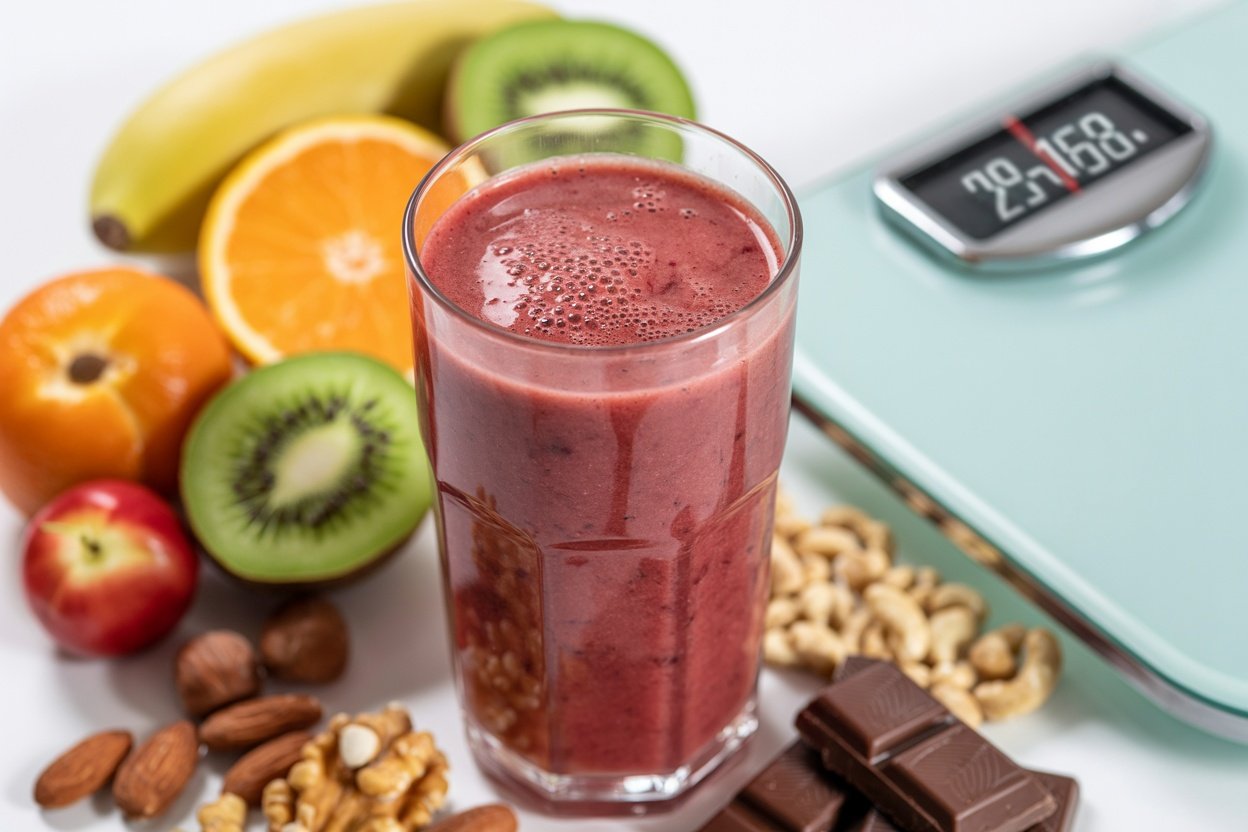
When it comes to weight loss, it’s crucial to be mindful of what you’re drinking. You may think you’re making healthy choices, but those calories can add up quickly. The image here shows a delicious-looking smoothie surrounded by colorful fruits and nuts. While they look nutritious, they contain hidden calories that can sabotage your efforts.
Smoothies can be a tasty way to enjoy fruits, but many recipes include high-calorie extras like nut butter or chocolate. These ingredients enhance flavor but also increase the calorie count significantly. It’s easy to overlook just how much you’re consuming when slurping down that smoothie.
To keep your drinks healthy, focus on whole, low-calorie ingredients. For a refreshing drink, blend just a banana, some spinach, and water. This simple combination is tasty, filling, and much lower in calories. Always remember, liquid calories don’t fill you as much as solid food does, which can lead to consuming more calories throughout the day.
Make it a habit to check ingredient labels and be aware of portion sizes. If you’re unsure, consider using a food scale like the one shown in the image. It can help keep track of what you’re adding to your smoothies. Being mindful of your drink choices can help you stay on track with your weight loss goals.
“Healthy” Foods That Are High In Calories
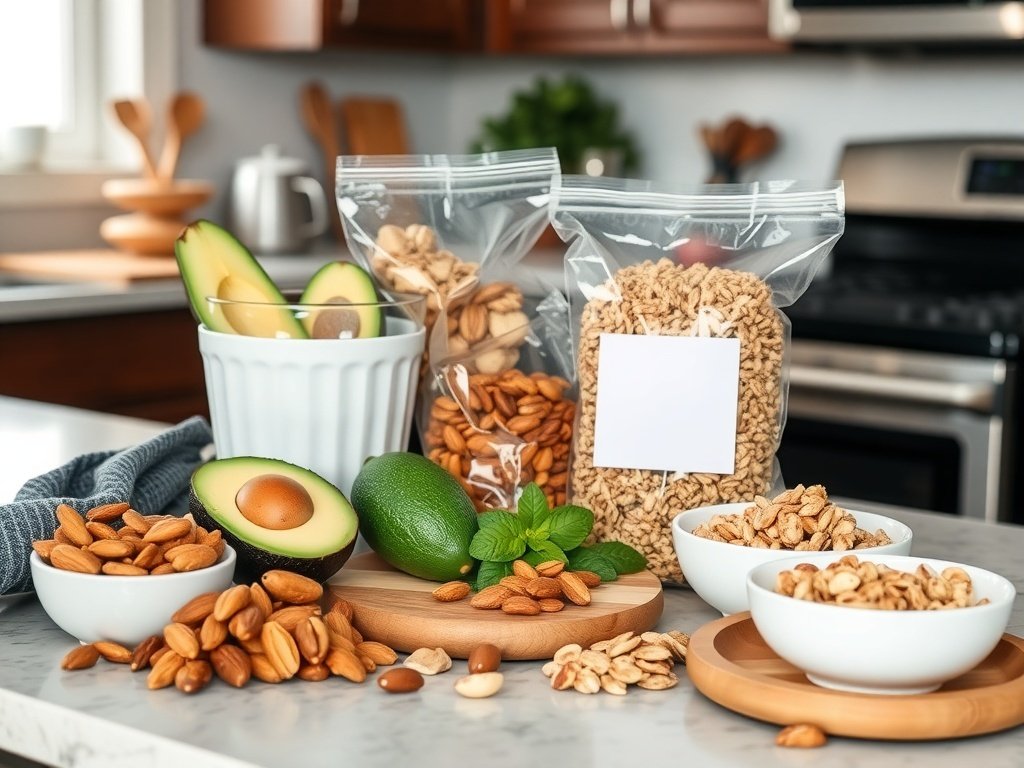
When it comes to weight loss, not all “healthy” foods are created equal. The image showcases a variety of items labeled with calorie counts, serving as a reminder that nutritious doesn’t always mean low-calorie. For instance, foods like avocados and nuts are often celebrated for their healthy fats, but they can pack a caloric punch. A single avocado might be around 250-300 calories! While these fats are beneficial, they should be consumed in moderation.
Granola is another item commonly perceived as a health food but can often be loaded with sugars and fats. Depending on the ingredients, a serving can easily reach 200-300 calories. Even a handful of almonds, while nutritious, can add up quickly as they contain about 160 calories for just 28 grams. It’s crucial to keep these portion sizes in mind when snacking.
Incorporating these foods into your diet wisely can be beneficial, just remember to balance them with lower-calorie options to ensure you meet your weight loss goals.
Portion Sizes That Sneak Up
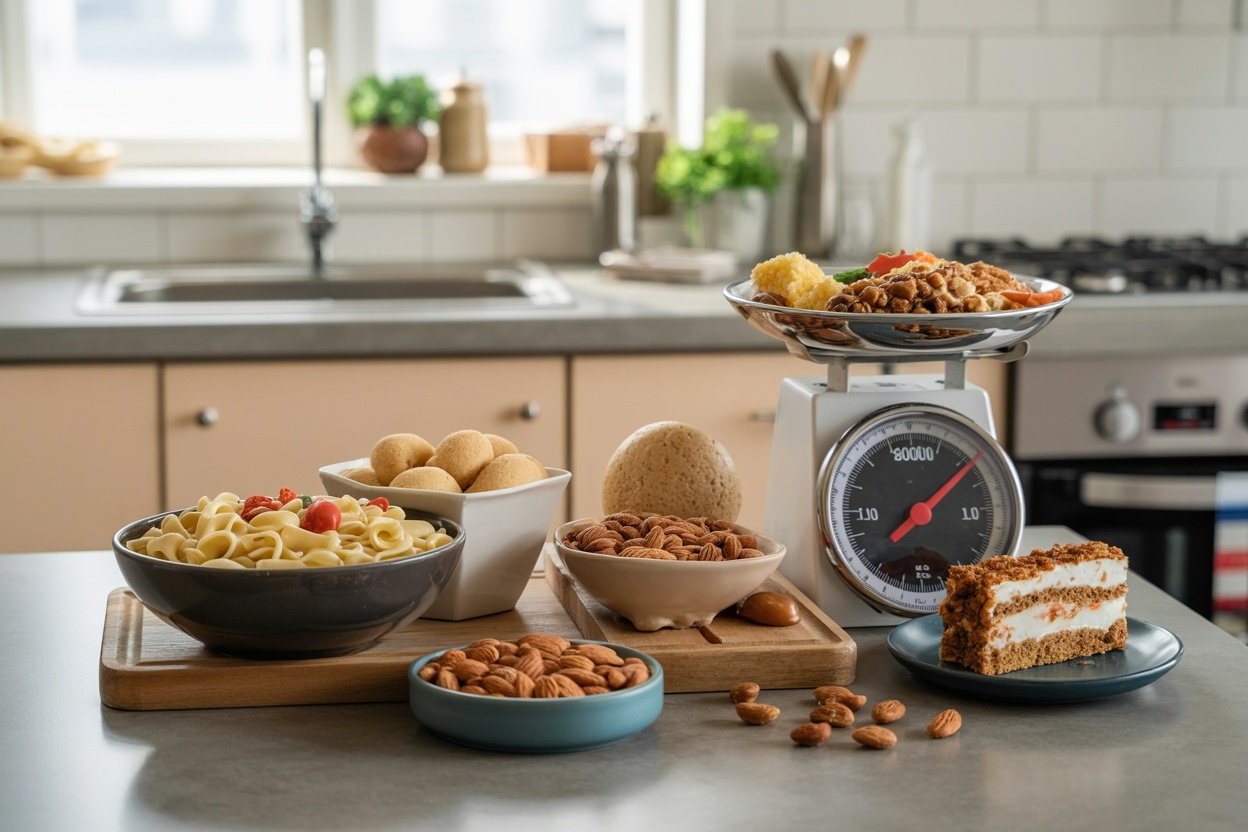
When it comes to weight loss, portion sizes play a crucial role. Many folks underestimate how much they’re actually eating, and that can stall progress. In the image, we see a variety of foods—pasta, snacks, and a tempting dessert—all measured on a scale. Each item represents calories that add up faster than we realize.
That bowl of pasta might look innocent, but those carbs can be high in calories if you serve more than a healthy portion. And those nuts and snacks? It’s easy to mindlessly munch away, losing track of how much we’ve indulged. Even desserts, like the slice of cake shown, can derail weight loss efforts if enjoyed too frequently or in large portions.
This visual reminder encourages you to measure out servings instead of eyeballing them. Rather than filling your plate, consider weighing out single servings. Doing this can help maintain a healthy balance in your diet, allowing you to enjoy your favorite treats without compromising your goals.
Sugary Drinks Disguised As Healthy
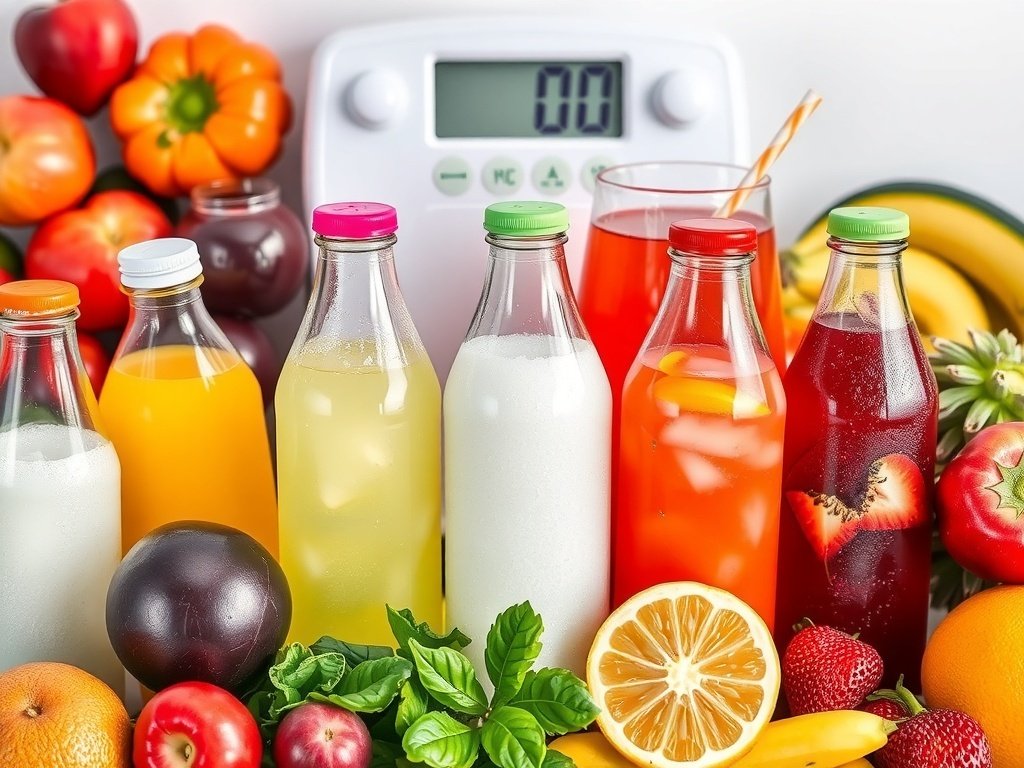
When you think of sugary drinks, sodas and sweetened teas usually come to mind. But many beverages marketed as ‘healthy’ can be just as deceptive. In the image, you can see various bottles lined up, some with bright colors and healthy fruit imagery. It’s easy to assume these drinks are good choices.
However, the terms like ‘Healthy Junk’ or ‘Vealer Vrnks’ on the labels can be misleading. These drinks often contain high amounts of added sugars, artificial flavors, and sweeteners. Just because they look appealing doesn’t mean they won’t derail your weight loss efforts.
For example, while sipping on a ‘healthy’ green drink, you might not realize that it packs as many calories as a dessert. It’s important to read the labels and understand what you’re actually consuming. Swapping out these drinks for water or unsweetened beverages can make a significant difference in your daily calorie intake.
Being aware of hidden calories in ostensibly healthy drinks is crucial. So, next time you’re shopping, keep an eye out for those sneaky sugary beverages—your waistline will thank you!
Cooking Oils And Dressings
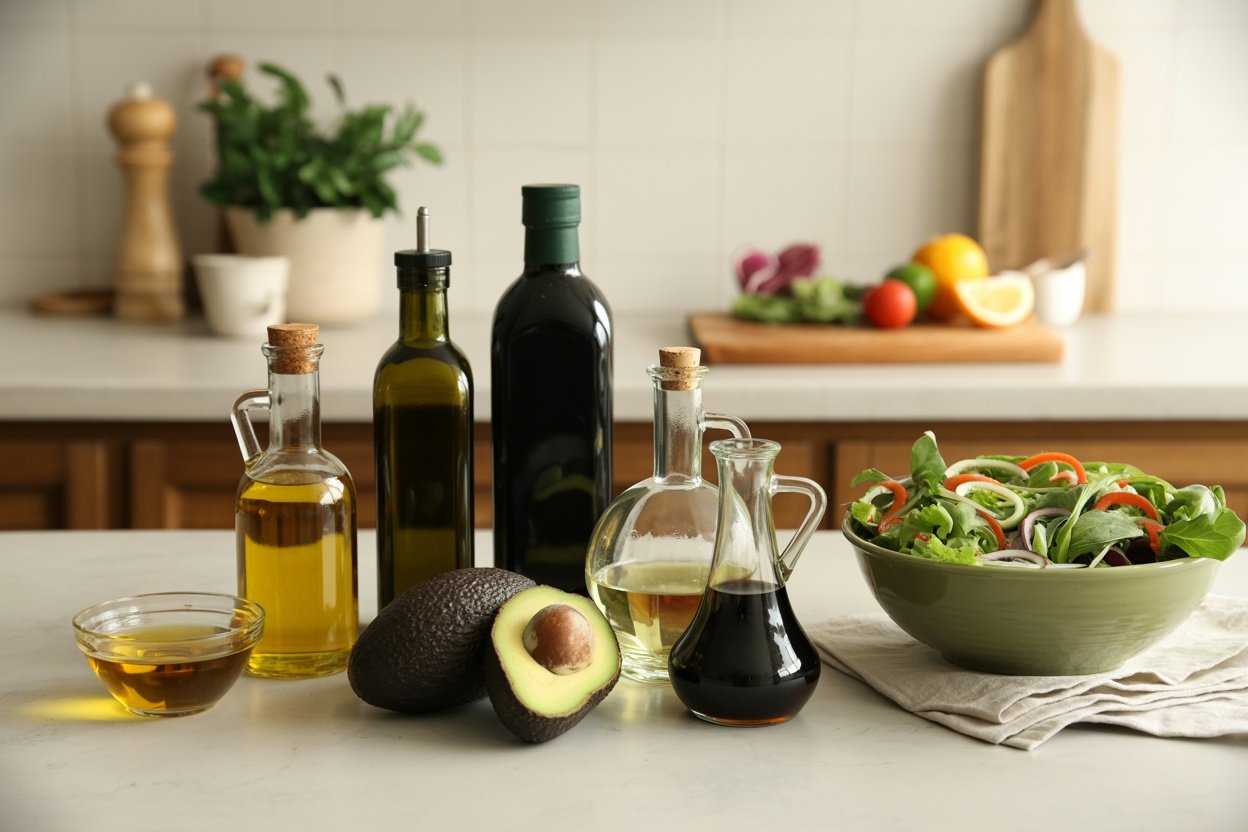
When it comes to eating healthy, cooking oils and dressings can sneak in hidden calories that derail your weight loss journey. Just a small amount can add up quickly. Take a look at the oils in the image—each one offers distinct flavors and health benefits, yet they are calorie-dense.
For instance, olive oil is a popular choice, known for its heart-healthy properties, but it’s easy to pour a bit too much when making salad dressings or sautéing vegetables. Even healthy oils can contribute extra calories. One tablespoon of olive oil has around 120 calories.
Then, there’s avocado oil, which is gaining popularity for its high smoke point and rich flavor. A tablespoon adds similar calories to your meals. While these oils can enhance your food, moderation is key. Always measure your servings to avoid unintentional extra calories.
Dressings, too, can be culprits. Creamy types can have astronomical calorie counts, while even vinaigrettes can pack a hidden punch if you’re not careful. A simple homemade dressing using vinegar, a splash of oil, and herbs can be a healthier, more controlled option.
The next time you whip up a meal, think twice about the oils and dressings you’re using. A little mindfulness goes a long way in managing your calorie intake!
Snacking Without Realizing It
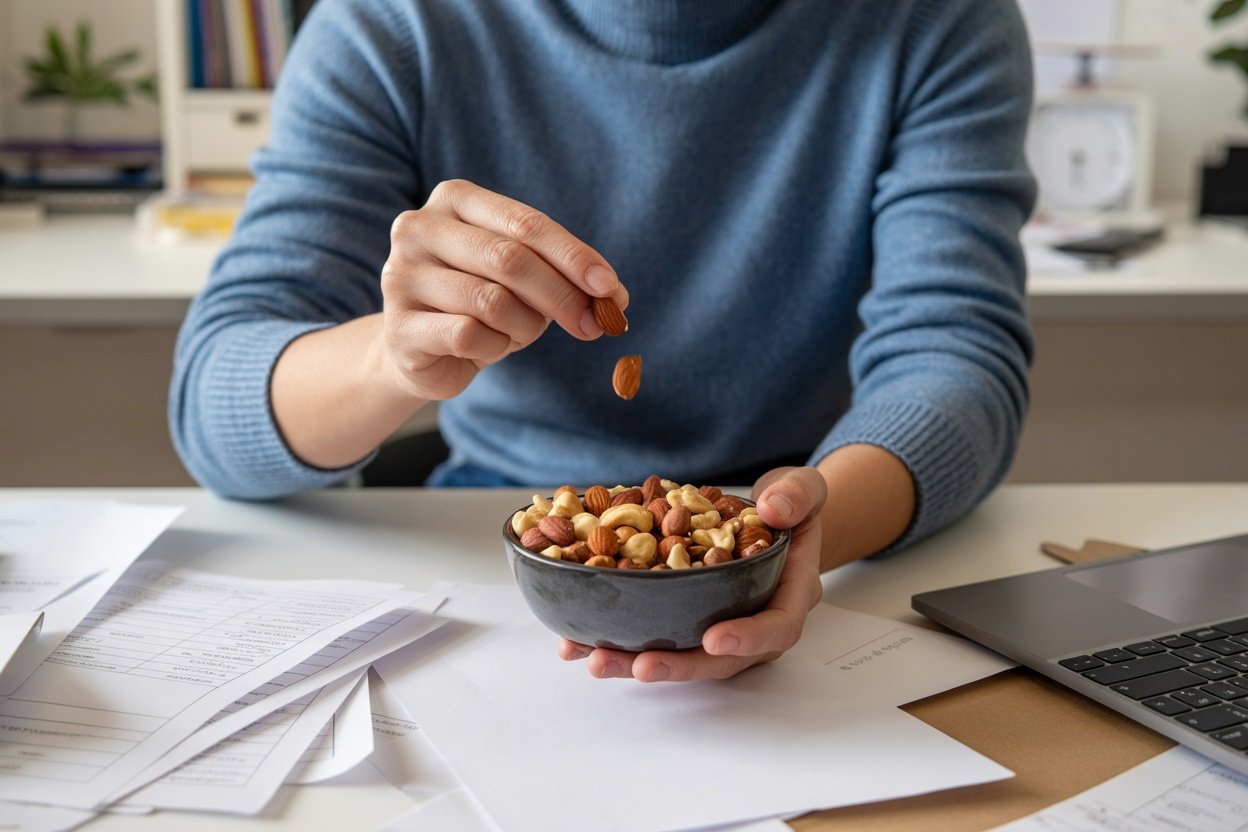
When you look at the image, you see someone casually enjoying a bowl of mixed nuts at a desk cluttered with papers and a laptop. This scene captures a common habit many people fall into: snacking while working or engaging in other activities. Those little nibbles often sneak in without us even noticing, making it easy to consume extra calories that hinder weight loss efforts. Nutritious as they may be, nuts are calorie-dense. Just a handful can pack a significant number of calories, which is why mindless snacking can sabotage your diet goals.
It’s easy to grab a few nuts here and there during focused tasks. This can seem harmless at first, but it quickly adds up. That’s why it’s crucial to be mindful of not only what you eat but when and how much. Setting intentional breaks for snacks can help you control portions and make healthier choices. Additionally, try preparing your snacks ahead of time to avoid overindulging. Instead of mindlessly munching on a big bowl, portion out a small serving to keep those calories in check while still enjoying a crunchy treat!
Coffee Add-Ons
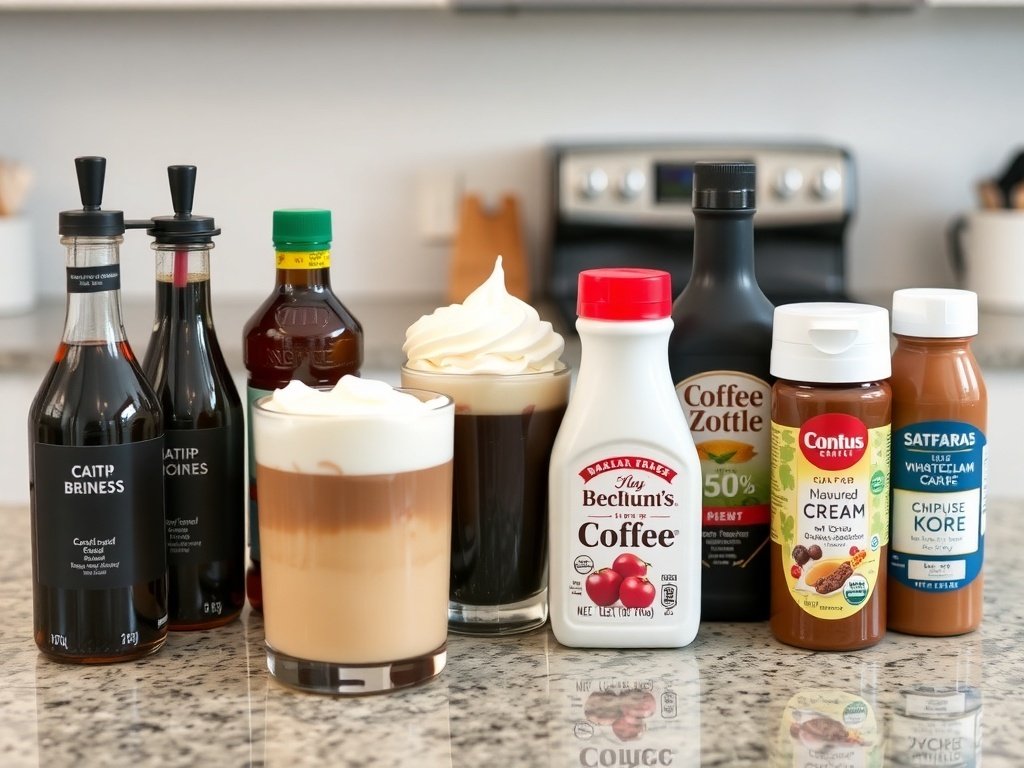
When it comes to coffee, many of us love to customize our cup. However, those tasty add-ons can be sneaky little calorie bombs that derail our weight loss efforts.
The image shows a variety of coffee additives lined up neatly. Each bottle and container represents a potential source of hidden calories. Sweeteners, flavored syrups, and creamers might seem harmless but can quickly add up, turning a simple cup of coffee into a caloric overload.
For example, adding flavored syrup can contribute upwards of 100 calories, while creamers often pack a significant amount of fat and sugar. Even the ubiquitous whipped cream can set you back more than you think!
A good approach is to stick to lower-calorie options like unsweetened almond milk or a sprinkle of cinnamon for flavor. When you’re mindful of these add-ons, your weight loss journey can be a little easier!
“Low-Fat” Or “Diet” Foods
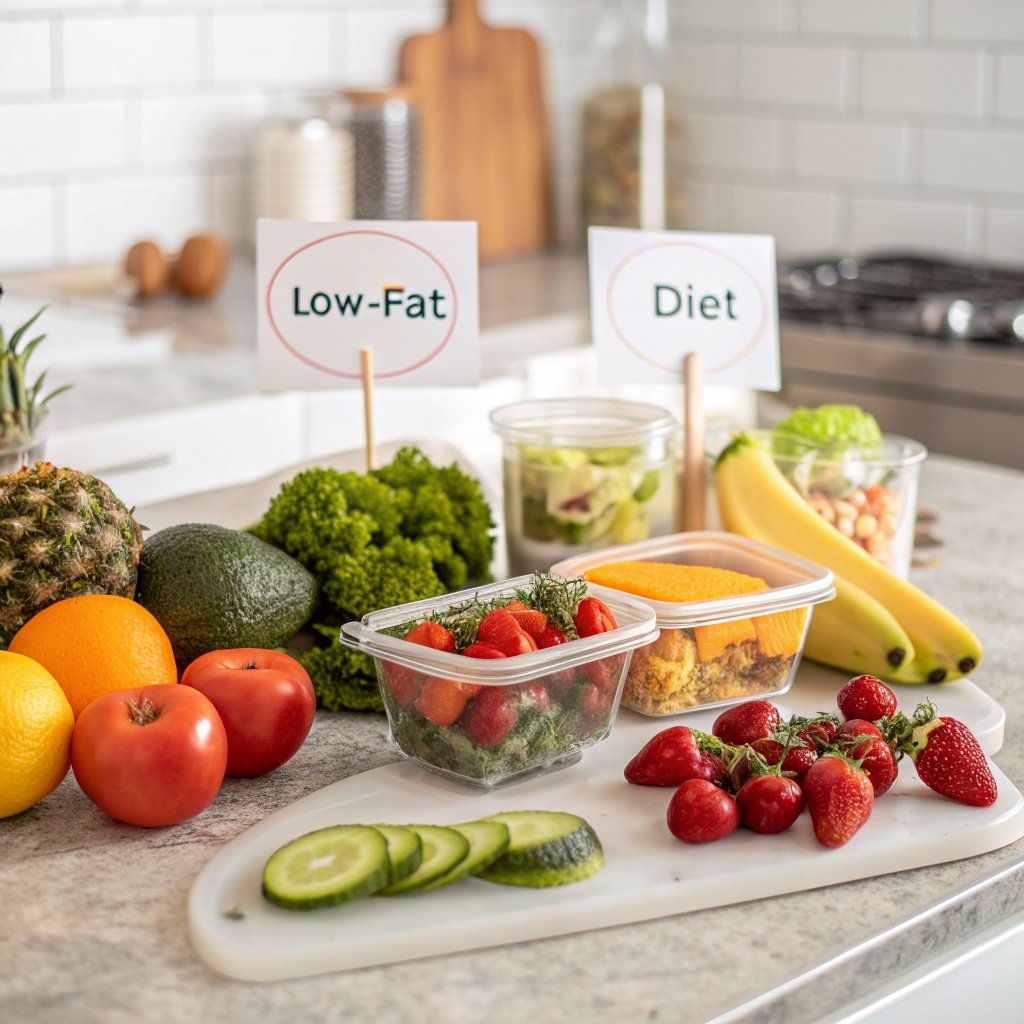
When browsing through grocery aisles, you might be drawn to products labeled as “low-fat” or “diet.” They seem like ideal choices for those looking to lose weight, right? However, it’s essential to dig deeper into those shiny labels.
Many low-fat foods replace fat with sugars or artificial ingredients. This shift can lead to surprisingly high calorie counts. For instance, a low-fat salad dressing might have fewer calories from fat, but it compensates with added sugars, pushing up the total caloric content.
Another sneaky suspect is low-fat yogurt. Often marketed as a healthy option, it can harbor hidden calories in the form of added sugars, making it less guilt-free than you’d think. Always check those nutrition labels!
In the image, we see a mix of low-fat products stacked up, showcasing how they can easily tempt you. The colorful packaging promises health benefits but can be deceiving. Focus on whole foods instead. Fresh fruits and veggies can satisfy cravings without adding unwanted calories.
Weekend Eating Habits

Weekends often feel like the perfect time to unwind and indulge, but they can also be a hidden trap for those trying to lose weight. The image of a family enjoying a pancake breakfast captures that cozy weekend vibe. You can almost smell the syrup and taste the sweet fruit on the side. But let’s dive deeper into those innocent-looking pancakes.
While pancakes can be a delightful treat, they often come with added calories that can derail your weight loss goals. The butter and syrup that usually accompany them may not seem like much at first, but when you pile it all on, those calories add up quickly. A seemingly simple breakfast can easily skyrocket in calorie count.
In addition to pancakes, it’s easy to snack more throughout the day. Social gatherings, brunches, or simply spending time at home can lead to mindless munching. Those extra snacks and treats, whether it’s a piece of cake or a handful of chips, can sneak in untracked calories that hinder your progress.
Being mindful of what and how much you eat during weekends is crucial. Consider prepping healthier meals or snacks ahead of time so you can enjoy family meals without the guilt. Try swapping out regular pancakes for healthier options like whole-grain or banana pancakes, or stick to fresh fruits to satisfy your sweet tooth without the extra calories.
Making small adjustments to your weekend eating habits can help you stay on track without sacrificing all the fun. Remember, enjoying food is part of life, but being mindful about hidden calories is key to reaching your weight loss goals!
This post may contain affiliate links which means I may receive a commission for purchases made through links. I will only recommend products that I have personally used! Learn more on my Private Policy page.